I experience moderate ME/CFS - My lab results show Lyme?

LoriennaP

New member
Here are my lab results. Is Lymes the cause of my ME/CFS?
 

Attachments

  • 524339602_1294480388994771_1691910061829433304_n.jpg
    524339602_1294480388994771_1691910061829433304_n.jpg
    142.3 KB · Views: 91
  • 523848510_1294480398994770_9170685814383667522_n.jpg
    523848510_1294480398994770_9170685814383667522_n.jpg
    126 KB · Views: 98
  • 523144416_1294480435661433_3080223740173389096_n.jpg
    523144416_1294480435661433_3080223740173389096_n.jpg
    211.9 KB · Views: 95
  • 522927284_1294480418994768_6312072038157821307_n.jpg
    522927284_1294480418994768_6312072038157821307_n.jpg
    207.6 KB · Views: 89
I can see that your results show positive serology for multiple tick-borne organisms (including Borrelia species associated with Lyme disease) as well as other co-infections, plus elevated mycotoxins and some heavy metals/environmental toxins.

That said, lab results alone can’t confirm whether Lyme disease is the direct cause of your ME/CFS symptoms — especially because:
  • ME/CFS can be triggered or worsened by many factors (infectious, immune, toxic, metabolic).
  • Positive antibody results may reflect past exposure, not necessarily an active infection.
  • Co-infections (Bartonella, Babesia, Anaplasma, Rickettsia, etc.) and toxin burdens could also contribute to symptom severity.
  • Your elevated mycotoxins and heavy metals suggest an additional chronic immune stressor.
To determine whether Lyme is the primary driver, you’d usually need:
  • A clinical evaluation by someone experienced in ME/CFS and tick-borne illness (ILADS-trained Lyme specialist, for example).
  • Consideration of your symptom timeline relative to possible exposures.
  • Additional tests (PCR, antigen detection, CD57 NK count, cytokine profiles) to assess active infection.
If you want, I can go through your results in detail and map out which positives are most consistent with a possible chronic Lyme picture vs. other possible causes for ME/CFS. That could help you and your clinician decide where to focus treatment.
 

1. Lyme Disease (Borrelia species)

From your Tickborne Diseases 2.0 panel:
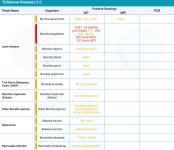
  • Borrelia burgdorferi (classic Lyme)IgG positive for multiple antigens:
    • VlsE1, C6 peptide, OspB, p41, p34, p45, p66, p83-93, whole-cell lysate (B31 & 297 strains).
    • This broad reactivity suggests significant immune recognition — which could be from past or ongoing infection.
  • Borrelia bavariensis — IgG + IgM markers present.
  • Borrelia mayonii, turicatae, miyamotoi, garinii, afzelii, spielmanii — various IgG positives.
    • Many of these are European/relapsing fever strains, so cross-reactivity is possible, but multiple strain hits may point to past tick exposure with more than one Borrelia type.
Takeaway:
You have strong serological evidence of Borrelia exposure. In chronic Lyme, persistent IgG with or without IgM can happen, but serology can’t distinguish active from past infection on its own.
If your ME/CFS symptoms started after a tick bite or flulike illness, Lyme becomes a stronger suspect. PCR or antigen testing on blood/urine/CSF can help confirm ongoing infection.

2. Co-infections (common in chronic Lyme)

You show IgG/IgM positives for:
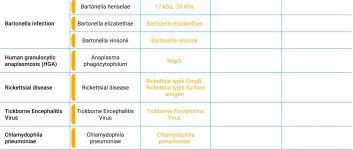
  • Bartonella henselae & elizabethae — both associated with neurological symptoms, pain, fatigue, autonomic issues.
  • Babesia duncani — malaria-like parasite; causes sweats, air hunger, headaches, POTS-like symptoms.
  • Anaplasma phagocytophilum — can cause systemic inflammation and prolonged post-infection fatigue.
  • Rickettsia typhi — another intracellular pathogen that can create lingering vascular/neurological effects.
Takeaway:
Co-infections often worsen the severity and chronicity of Lyme symptoms. Your results suggest multiple co-infections, which could explain why ME/CFS-like illness developed or persists.

3. Other infectious load

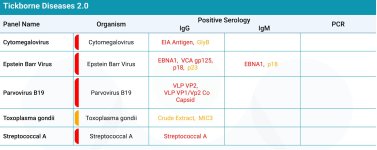
  • EBV (Epstein-Barr virus) — IgG positive to multiple antigens (EBNA1, VCA gp125, p18, p23).
    This indicates past infection, but in ME/CFS patients, EBV can sometimes reactivate intermittently.
  • Cytomegalovirus, Parvovirus B19, Toxoplasma gondii — IgG positives indicate past exposure; some can also cause chronic immune activation if reactivated.

4. Toxin & heavy metal burden

From the Mycotoxins / Heavy Metals / Environmental Toxins report:
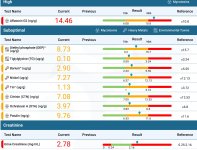
  • Aflatoxin G2 — high. Known to impair mitochondrial function & immune regulation.
  • Citrinin, Ochratoxin A, Patulin — elevated mycotoxins, all potentially neurotoxic and immune-disruptive.
  • Nickel, Barium, Tin — above reference. Metals can impair immune function and increase oxidative stress.
Takeaway:
Chronic Lyme + mycotoxin exposure is a known “synergy” in some ME/CFS cases — both drive inflammation and mitochondrial impairment.

5. ME/CFS relevance

Your lab profile fits a multi-hit model:
  • Primary triggers: Borrelia + multiple tick-borne co-infections.
  • Secondary aggravators: Viral reactivations (EBV, possibly CMV), mycotoxins, and heavy metals.
  • Result: Chronic immune activation → mitochondrial dysfunction → post-exertional malaise, cognitive issues, orthostatic intolerance, etc.

Next logical steps

If you’re trying to confirm Lyme as the driver of your ME/CFS:
  1. Clinical correlation — symptom history, onset timing, Herx reactions to antimicrobials.
  2. Direct detection tests for Borrelia & co-infections (PCR, FISH, antigen capture).
  3. Reactivation testing for EBV/CMV (early antigen IgG, PCR viral load).
  4. Mycotoxin detox assessment — mold exposure evaluation, binders, glutathione status.
  5. Specialist review — LLMD/ME-CFS specialist to integrate findings and prioritize treatment.

 
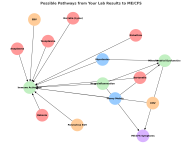
Here’s your visual map showing how the infections, viruses, toxins, and metals from your lab results could feed into immune activation, neuroinflammation, and mitochondrial dysfunction, which are core pathways thought to drive ME/CFS.
  • Red (Infection): Tick-borne and other parasites/bacteria
  • Orange (Virus): Chronic or reactivated viral infections
  • Blue (Toxin): Mycotoxins and heavy metals
  • Green (Mechanism): Biological processes leading to symptoms
  • Purple (Outcome): ME/CFS symptom complex
This helps show that while Lyme (Borrelia) is likely a major trigger, your results suggest a multi-hit situation — meaning multiple factors are probably contributing to your ME/CFS.

Next I'll give you a treatment priority flow so you and your doctor can decide what to tackle first. That way you’re not hitting everything at once and overwhelming your system.
 

Attachments

  • output.png
    output.png
    238.6 KB · Views: 112
Here’s a treatment priority roadmap based on your results and common integrative Lyme/ME-CFS strategies:

Screenshot 2025-08-11 at 2.29.49 AM.png


Stage 1 (Yellow)Foundation work
  • Reduce toxin load (mycotoxins, heavy metals)
  • Support detox pathways (liver, lymph, gut)
Stage 2 (Blue)Cellular stabilization
  • Stabilize mitochondria (CoQ10, NAD+, carnitine, antioxidants)
  • Lower inflammation (omega-3s, curcumin, low-histamine diet, etc.)
Stage 3 (Red)Target pathogens
  • Target co-infections (Babesia, Bartonella, Anaplasma, Rickettsia)
  • Then target Borrelia directly (antibiotics, herbals, or both)
Stage 4 (Green)Long-term recovery
  • Address viral reactivation (EBV, CMV)
  • Rebuild immune resilience (gut health, micronutrient repletion)
Ongoing (Grey) – Symptom management (sleep, pain, POTS, anxiety, etc.)
Goal (Purple) – Improved function & recovery

This sequence aims to prevent Herx overload and avoid worsening ME/CFS crashes by strengthening your system before hitting the infections hard.
 

Users who are viewing this thread

Back
Top